Nutrition and Breastfeeding: What to Eat, What to Avoid & What Actually Helps Milk Supply
by Bonnie Logsdon, RD, IBCLC, Doula
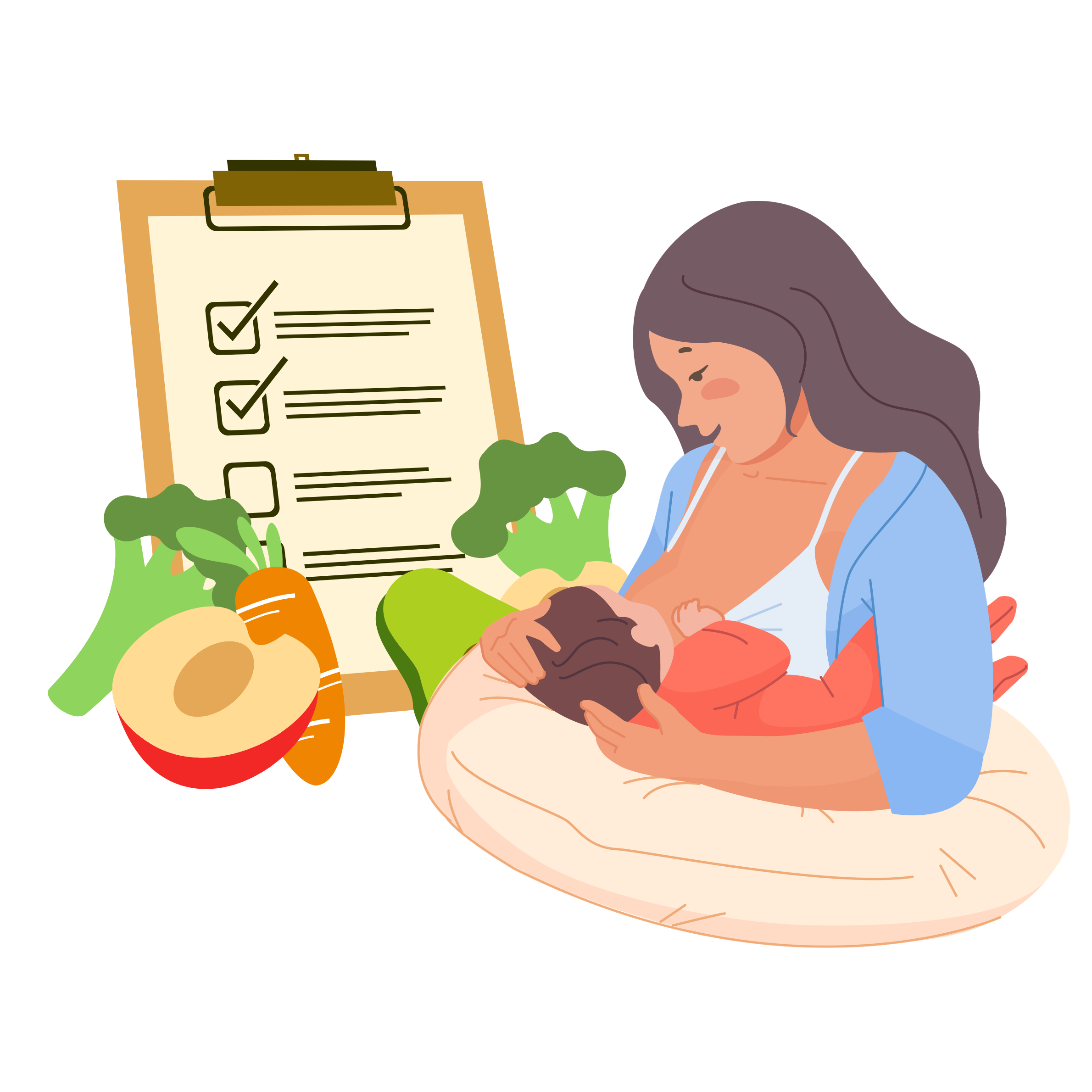
Pregnancy gets a lot of attention when it comes to nutrition.
Take your prenatal vitamin. Eat enough protein. Watch the caffeine. Eat fish—but not that fish. Don't eat this. Make sure you eat that.
Then you have the baby and suddenly the nutrition advice gets a lot quieter. Until you count people telling you NOT to eat something because it might impact the baby through your breastmilk…more on that later.
Meanwhile, you're recovering from birth, feeding a baby around the clock, sleeping in two-hour stretches, and wondering:
Do I need to eat more because I'm breastfeeding?
Are there foods that increase breast milk supply?
Can something I eat make my baby gassy?
How much water am I supposed to drink?
Can I drink coffee?
And why am I SO hungry?
As a Registered Dietitian (RD), International Board Certified Lactation Consultant (IBCLC), and birth doula, I hear these questions all the time.
So let's talk about what nutrition while breastfeeding actually looks like—and take some of the pressure off.
Quick Answer: What Should You Eat While Breastfeeding?
There is no special diet you have to follow while breastfeeding.
Most breastfeeding parents need some additional energy and should focus on eating enough overall, including a variety of protein foods, carbohydrates, fats, fruits, vegetables, and foods that provide nutrients such as calcium, iron, iodine, choline, vitamin D, vitamin B12, and omega-3 fats.
You also don't need a perfect diet to make nutritious milk.
And no single food, including oatmeal, lactation cookies, special drinks, or herbal supplements, has been proven to reliably create a full milk supply.
If milk production is a concern, nutrition is only one piece of the puzzle. An IBCLC can evaluate milk transfer, feeding frequency, pumping, infant growth, and other factors that may be affecting milk production.
Are You Really "Eating for Two" While Breastfeeding?
Sort of—but probably not in the way you've heard the phrase used.
Making milk requires energy. Breastfeeding generally increases energy needs by several hundred calories per day, although your individual needs depend on factors such as how much milk you're producing, your activity level, body size, and whether you're exclusively breastfeeding.
But as a dietitian, I don't love telling newly postpartum parents to obsess over counting calories.
Your body just went through pregnancy and birth. Now it is recovering while simultaneously producing food for another human.
Hunger sensation is useful information.
For many breastfeeding parents, that means being hungrier than expected. Sometimes much hungrier.
Rather than thinking about "eating for two," I prefer: Eat enough to nourish yourself while your body nourishes your baby.
Why Am I So Hungry While Breastfeeding?
Because producing milk requires energy!
Increased hunger can be completely normal during breastfeeding, especially during the early postpartum months and periods when your baby is nursing or you're pumping frequently.
One of my favorite postpartum strategies as both a dietitian and doula is creating a feeding station for the parent, not just the baby. Wherever you usually breastfeed or pump, keep easy foods nearby.
Think:
Greek yogurt
Cheese sticks
Nuts or trail mix
Fresh or dried fruit
Peanut butter and crackers
Hummus
Hard-boiled eggs
Protein bars
Sandwiches
Oatmeal
Smoothies
Leftovers you can easily reheat
Try combining carbohydrate + protein + fat when you can. That combination tends to be more satisfying and provides your body with a variety of nutrients.
But postpartum nutrition does not need to be Pinterest-worthy.
Sometimes a balanced dinner happens.
Sometimes you're eating a peanut butter sandwich with one hand while holding a baby with the other.
Both count.
What Nutrients Are Especially Important While Breastfeeding?
A varied diet can provide most of the nutrients needed during lactation, but breastfeeding does increase the need for certain nutrients.
Some worth paying attention to include:
Protein: Supports postpartum healing and your body's ongoing needs.
Iodine: Important for thyroid function and infant brain and nervous system development.
Choline: Plays an important role in infant brain and nervous system development.
Calcium and vitamin D: Important for bone health.
Iron: Particularly important if you experienced significant blood loss during delivery or entered pregnancy/postpartum with low iron stores.
Vitamin B12: Especially important for parents following vegan or some vegetarian diets.
Omega-3 fatty acids, including DHA: Important for infant brain and eye development.
Fish can be an excellent source of protein, DHA, iodine, choline, vitamin D, and other nutrients. Current FDA/EPA guidance recommends that breastfeeding parents consume 8–12 ounces (2–3 servings) per week of a variety of lower-mercury fish.
People following vegetarian, vegan, highly restrictive, or elimination diets may benefit from individualized nutrition guidance to make sure nutrient needs are being met.
Do I Need to Keep Taking My Prenatal Vitamin While Breastfeeding?
Many people continue a prenatal or other appropriate multivitamin while breastfeeding, but the right supplement depends on your diet, medical history, lab values, and the nutrients contained in the product.
More isn't always better with supplements.
If you're taking a prenatal vitamin plus separate vitamin D, iron, omega-3, herbal lactation supplements, and several other products, it can be helpful to have a Registered Dietitian or healthcare provider review the whole picture.
Does My Diet Determine the Quality of My Breast Milk?
Here's something I really want postpartum parents to hear:
You do not need to eat perfectly to make good milk.
Human lactation is remarkably resilient. Your milk doesn't suddenly become "bad" because lunch was a granola bar eaten over the kitchen sink. Yes, nutrition matters. But it matters tremendously for you, too.
Pregnancy, birth, postpartum recovery, interrupted sleep, and milk production all place demands on your body.
Instead of only asking:
"Will this food make better breast milk?"
I want parents asking:
"What does my body need right now?"
Sometimes that's salmon, roasted vegetables, and rice.
Sometimes it's takeout.
Sometimes it's a bowl of cereal at 2 a.m.
Feeding yourself matters.
How Much Water Should I Drink While Breastfeeding?
Drinking enormous amounts of water does not automatically increase breast milk supply.
You may notice that breastfeeding makes you very thirsty. That's normal. Keep water or another beverage nearby when you breastfeed or pump and drink regularly throughout the day. But here's an important myth to bust: Drinking enormous amounts of water does not automatically increase breast milk supply.
Your body needs adequate hydration, but forcing excessive fluids isn't a treatment for low milk production. And hydration doesn't have to mean plain water. Milk, sparkling water, soups, smoothies, and other beverages all contribute to fluid intake.Those giant water bottles are great if you like them. You just don't have to turn hydration into another postpartum job.
What Foods Increase Breast Milk Supply?
This might be one of the most common nutrition questions I hear as an IBCLC.
Oatmeal, Brewer's yeast, Fenugreek, Flaxseed, Coconut water, BodyArmor, Lactation cookies, Mother's milk tea-
Do these things increase milk supply?
The short answer: No. There is no single food proven to reliably increase milk production.
Foods, herbs, medications, and other substances used with the goal of increasing milk production are often called galactagogues.
Evidence supporting many galactagogues is limited or mixed. Even herbal products can have side effects, interact with medications, or be inappropriate for certain people.
The American College of Obstetricians and Gynecologists (ACOG) recommends that galactagogues not be considered first-line treatment for low milk supply because evidence of their effectiveness is relatively inconclusive.
Before reaching for a supplement, we need to answer a much more important question:
Why is milk production low—or is it actually low at all?
What Actually Increases Breast Milk Supply?
Milk production is primarily driven by frequent and effective milk removal.
When milk is effectively removed through breastfeeding, pumping, and/or hand expression, the breasts receive signals to continue producing milk. If someone comes to me concerned about milk production, I'm not just asking what they ate for breakfast.
As an IBCLC, I want to look at things like:
How often baby is feeding
How effectively baby transfers milk
Baby's growth pattern
Latch and positioning
Pumping frequency
Pump effectiveness and flange fit
Supplementation and bottle-feeding patterns
Birth history
Postpartum hemorrhage or retained placenta
Breast or chest surgery
Thyroid or hormonal conditions
PCOS and metabolic factors
Medications
Breast anatomy
Infant oral function
Prematurity or infant health conditions
Changes in feeding or pumping patterns
Food supports a lactating body. But food can't necessarily fix the underlying reason milk isn't being produced or removed effectively.
There isn't a smoothie powerful enough to fix poor milk transfer.
Worried About Your Milk Supply?
Before spending more money on supplements, cookies, teas, or special drinks, consider having an IBCLC evaluate what is actually happening.
Bonnie Knows Breast® provides individualized lactation consultations for milk supply, latch, pumping, milk transfer, infant growth, supplementation, and other feeding concerns.
Does Oatmeal Increase Breast Milk Supply?
Maybe for some people, but we don't have good evidence showing that oatmeal reliably increases milk production.
Eat oatmeal because you like oatmeal!
Oats are nutritious, affordable, easy to prepare, and a good source of carbohydrates and fiber. Add nuts or seeds, fruit, and milk or yogurt and you've got a pretty great postpartum breakfast. If you notice more milk when you eat oatmeal, there's certainly nothing wrong with continuing to eat it. But you don't have to eat oatmeal to successfully breastfeed. And oatmeal cannot compensate for ineffective milk removal.
Do Lactation Cookies Work?
The most reliable thing in many lactation cookies may simply be energy—and that's not necessarily a bad thing!
A breastfeeding parent who hasn't had time to eat all day may genuinely benefit from an easy, calorie-dense snack. But putting "lactation" on a package doesn't mean a product has been proven to increase milk production. Some lactation products also contain herbal galactagogues such as fenugreek. Research on fenugreek for milk production has produced mixed results, and herbal supplements can cause side effects and medication interactions. But you also don’t need to spend extra dollars on a cookie labeled “lactation”.
Are There Foods That Decrease Breast Milk Supply?
For most people, normal amounts of ordinary foods aren't going to suddenly tank milk production.
Some herbs, including sage and peppermint, have traditionally been associated with decreasing milk production when consumed in larger or concentrated amounts. Evidence is limited, however, and eating a normal amount of an herb or mint-flavored food is very different from consuming concentrated preparations.
More important reasons for decreasing milk production can include:
Less frequent breastfeeding or pumping
Ineffective milk removal
Changes in baby's feeding pattern
Certain medications
Hormonal changes
Pregnancy
Illness
Pump problems
Weaning
Other maternal or infant health factors
If your milk production suddenly changes, don't immediately blame last night's dinner.
Let's look at the bigger picture and schedule a lactation visit if you feel concerned.
Can Something I Eat Make My Breastfed Baby Gassy?
Parents get a lot of unnecessary advice about this.
"Don't eat broccoli."
"Stay away from beans."
"You ate onions—that's why the baby has gas."
But that's not how digestion and breast milk work.
The gas produced in your intestines from digesting certain carbohydrates doesn't travel through your bloodstream and into your breast milk.
For most breastfeeding parents, there's no reason to routinely avoid broccoli, beans, cabbage, onions, spicy foods, or other so-called "gassy foods."
Babies are also naturally pretty noisy, squirmy, and gassy creatures. Their digestive and nervous systems are still developing, and normal infant behavior is frequently blamed on something the breastfeeding parent ate.
Can My Baby React to Foods I Eat While Breastfeeding?
Yes. But that's different from everyday newborn gas or fussiness.
Proteins from foods can enter human milk, and some babies have true food allergies or other food-related conditions. Cow's milk protein is one of the more commonly discussed examples.
However, I don't recommend automatically eliminating dairy, soy, gluten, eggs, nuts, and other foods "just in case."
Elimination diets can make postpartum nutrition much more difficult and, when unnecessarily restrictive, can increase the risk of nutrient inadequacy.
If your baby has symptoms such as blood in the stool, significant or persistent vomiting, poor growth, severe eczema, or other concerning symptoms, talk with your baby's healthcare provider and consider working with an IBCLC and/or Registered Dietitian before eliminating major food groups.
Can I Eat Spicy Foods While Breastfeeding?
Yes.
You generally do not need to avoid spicy or strongly flavored foods while breastfeeding. Families around the world breastfeed while eating incredibly diverse diets. If you notice a clear, consistent, and reproducible reaction to a particular food, that's worth discussing with your baby's healthcare provider.
Otherwise, there's no reason to begin breastfeeding with a long list of foods you're suddenly "not allowed" to eat.
Can I Drink Coffee While Breastfeeding?
Usually, yes.
Caffeine does pass into breast milk in small amounts, but moderate caffeine intake is generally compatible with breastfeeding.
Very young and premature babies clear caffeine more slowly than older babies. If you're consuming a lot of caffeine and your baby seems unusually jittery, irritable, or has difficulty sleeping, you might experiment with reducing your intake.
And as a doula who knows what newborn sleep looks like, I am not interested in unnecessarily taking coffee away from an exhausted postpartum parent.
Can I Eat Fish While Breastfeeding?
Absolutely—and fish can be a valuable part of a breastfeeding diet.
FDA and EPA guidance recommends 2–3 servings, or approximately 8–12 ounces, of lower-mercury fish per week for people who are breastfeeding.
Options in the FDA's "Best Choices" category include many commonly available fish and shellfish. Fish provides protein as well as nutrients such as omega-3 fatty acids, iodine, choline, vitamin D, iron, and zinc.
The goal isn't to avoid seafood. It's to choose a variety of options that are lower in mercury.
Can I Lose Weight While Breastfeeding?
Your body may change during breastfeeding, but the early postpartum period is generally not a time when I want someone aggressively restricting food.
Your body is healing.
You're adjusting to caring for a newborn.
You're probably sleep deprived.
And you're producing milk.
Postpartum nutrition can focus on recovery, nourishment, strength, energy, satisfaction, and overall health rather than immediately focusing on making your body smaller.
You do not owe anyone a "bounce-back" body.
If intentional weight loss is something you want to pursue while breastfeeding, a Registered Dietitian can help you develop an individualized approach that takes your nutritional needs and breastfeeding goals into account.
When Should I See an IBCLC About Breastfeeding?
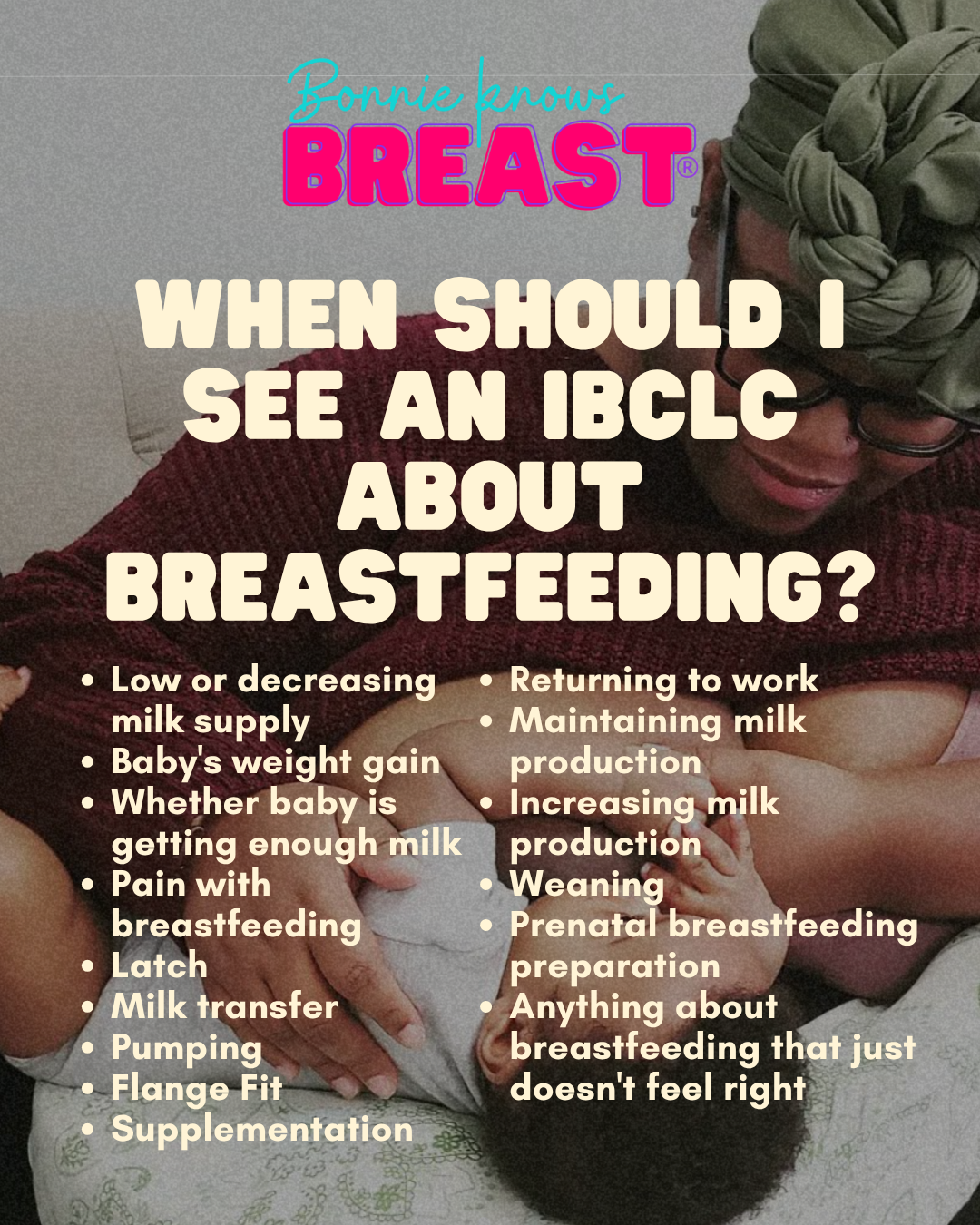
You don't have to wait until breastfeeding feels like a crisis to contact an IBCLC.
Consider scheduling a lactation consultation if you have concerns about:
Low or decreasing milk supply
Baby's weight gain
Whether baby is getting enough milk
Pain with breastfeeding
Latch
Milk transfer
Pumping
Flange fit
Supplementation
Returning to work
Maintaining milk production
Increasing milk production
Weaning
Prenatal breastfeeding preparation
Anything about breastfeeding that just doesn't feel right
An IBCLC can evaluate you, your baby, and the feeding relationship as a whole rather than treating milk supply as something that can be solved by simply eating the right food.
When Should I See a Dietitian About Nutrition While Breastfeeding?
Nutrition and lactation overlap more than people realize.
As a Registered Dietitian and IBCLC, I especially like working with families when questions involve both.
That might include:
Postpartum nutrition
Feeling excessively hungry or struggling to eat enough
Vegetarian or vegan diets
Elimination diets
Food allergy concerns
Nutrient deficiencies
Iron deficiency
Supplements
Food restrictions
Weight concerns
Questions about foods or supplements marketed for milk supply
Nutrition concerns alongside low milk production
Sometimes the answer is nutritional.
Sometimes it's lactation-related.
And sometimes it's both.
Get Individualized Breastfeeding and Nutrition Support
If you've made it this far because you're worried about milk production, wondering whether something you're eating is affecting your baby, or trying to figure out how to nourish yourself while breastfeeding, you don't have to sort through all the conflicting information by yourself.
At Bonnie Knows Breast®, our team provides individualized support for breastfeeding, pumping, milk supply, infant feeding, and more.
We offer:
Office lactation consultations in Louisville, Kentucky
Home lactation visits throughout Louisville and the greater Kentuckiana area
Virtual lactation consultations
Nutrition consultations
Prenatal lactation consultations
Pumping and flange-fitting support
Virtual telehealth care makes it possible to get support even when you aren't close to our Louisville office.
If your question is:
"Is my baby getting enough?"
"Why did my milk supply drop?"
"Should I eliminate dairy?"
"Do I need to eat more because I am breastfeeding?"
"Is this supplement safe to take while breastfeeding?"
"Why am I pumping less milk?"
or simply…
"Am I doing this right?"
Those are exactly the kinds of questions we're here to help you answer.
Because feeding your baby matters.
And feeding yourself matters, too.
Frequently Asked Questions About Nutrition and Breastfeeding
Do I need to eat more while breastfeeding?
Usually, yes. Producing breast milk requires additional energy, but individual needs vary. Rather than focusing exclusively on calorie counting, pay attention to hunger, eat regularly, and include a variety of nutrient-dense foods.
What is the best food to increase breast milk supply?
There isn't one. No single food has been proven to reliably increase milk production. Frequent and effective milk removal is generally much more important to milk production than any particular food.
What foods should I avoid while breastfeeding?
Most breastfeeding parents do not need to routinely avoid specific foods. Certain fish that are high in mercury should be avoided, and individual medical conditions or confirmed infant food allergies may require additional dietary guidance.
Does drinking more water increase breast milk supply?
Adequate hydration is important, but drinking excessive amounts of water does not automatically increase milk production. Drink regularly and respond to your thirst.
Can I eat dairy while breastfeeding?
Yes, unless you have a reason to avoid it or your baby's healthcare team has identified a possible reaction to cow's milk protein. Avoid eliminating dairy simply because a baby is normally gassy or fussy.
Does oatmeal increase breast milk?
Some parents report that oatmeal helps their milk production, but there isn't strong evidence that oatmeal reliably increases milk supply. It's still a nutritious, convenient postpartum food if you enjoy it.
Who should I see if I'm worried about milk supply?
An International Board Certified Lactation Consultant (IBCLC) can assess feeding frequency, latch, milk transfer, pumping, infant growth, maternal health factors, and other potential contributors to low milk production. If nutrition may also be contributing, working with an IBCLC who is also a Registered Dietitian can be particularly helpful.
References & Resources
American College of Obstetricians and Gynecologists (ACOG). Breastfeeding Challenges. Committee Opinion No. 820.
Academy of Breastfeeding Medicine. Clinical Protocol #9: Use of Galactogogues in Initiating or Augmenting Maternal Milk Production.
National Library of Medicine. Drugs and Lactation Database (LactMed®). National Institutes of Health.
U.S. Food and Drug Administration & U.S. Environmental Protection Agency. Advice About Eating Fish for Those Who Might Become or Are Pregnant or Breastfeeding.
Dietary Guidelines for Americans. U.S. Departments of Agriculture and Health and Human Services.
Centers for Disease Control and Prevention. Maternal Diet and Breastfeeding.
This information is intended for general education and is not a substitute for individualized medical, nutrition, or lactation care. Contact your healthcare provider, your baby's healthcare provider, an IBCLC, and/or a Registered Dietitian for recommendations specific to you and your baby.