Can You Drink Alcohol While Breastfeeding? What Parents Actually Need to Know
Can you have a glass of wine, beer, or cocktail while breastfeeding?
This is one of those questions that can generate wildly different answers depending on whom you ask. Some parents have been told they shouldn't drink at all while breastfeeding. Others have heard, “If you can find the baby, you can feed the baby.” And somewhere in between is the persistent advice to “pump and dump.”
So what does the evidence actually tell us?
The short version: Having an occasional alcoholic drink does not mean you need to stop breastfeeding, dump your milk, or automatically skip a feeding. Understanding how alcohol moves into—and back out of—human milk can help you make an informed decision without unnecessary fear or guilt.
How Does Alcohol Get Into Breast Milk?
Alcohol passes from your bloodstream into your breast milk. The alcohol concentration in human milk closely follows the alcohol concentration in your blood.
This is an important concept because your breasts aren't storing alcohol until the milk is removed.
As your blood alcohol concentration rises, the amount of alcohol in your milk rises. As your body metabolizes the alcohol and your blood alcohol level falls, the alcohol level in your milk falls too.
According to the CDC, alcohol levels in breast milk are generally highest about 30–60 minutes after drinking. Alcohol from one standard drink can typically be detected for approximately 2–3 hours, although the actual time varies based on body weight, how much and how quickly you drank, whether you ate while drinking, and individual metabolism.
That's why time—not pumping—is what removes alcohol from breast milk.
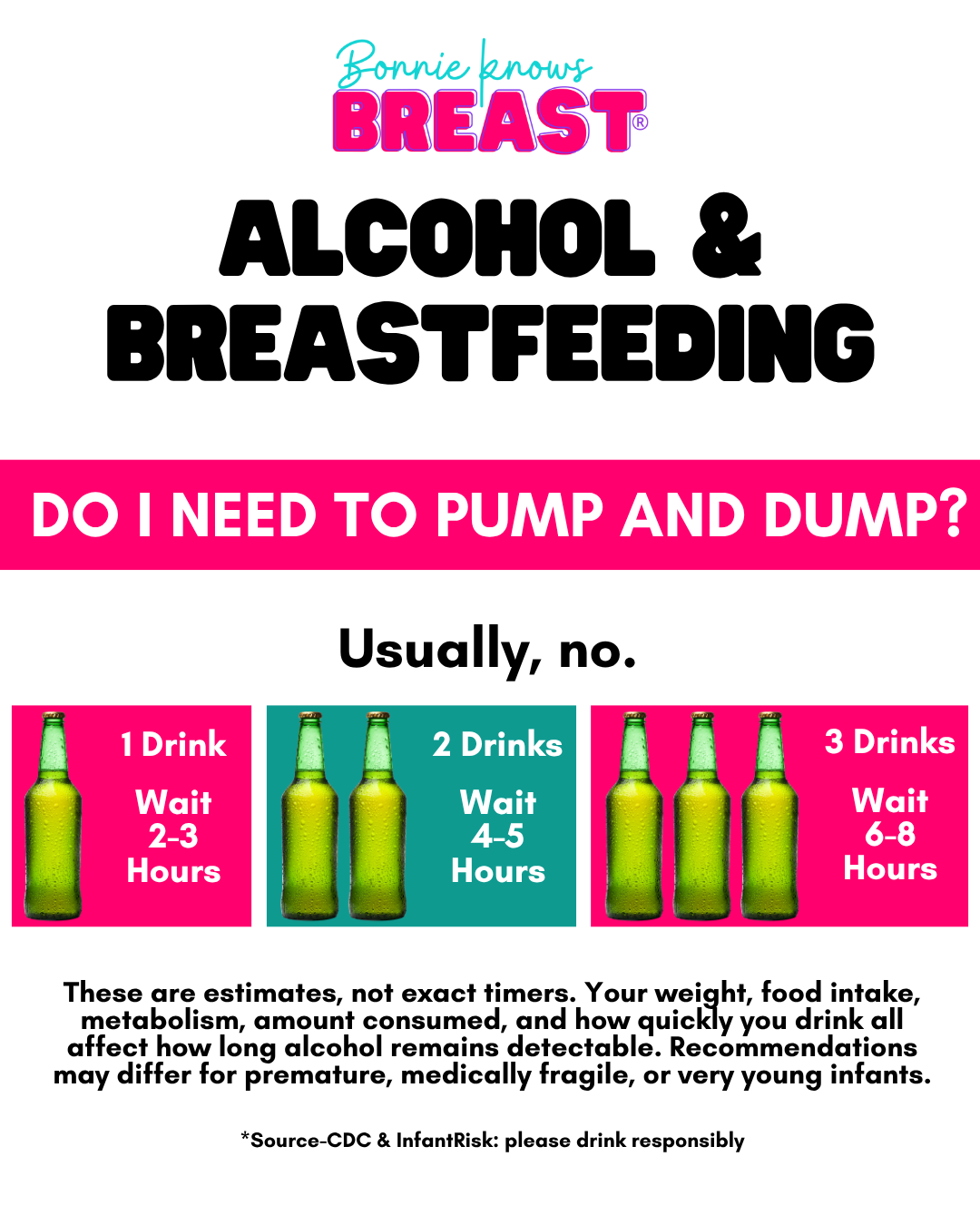
So...Do I Need to Pump and Dump?
Usually, no.
This may be one of the biggest breastfeeding myths out there.
Pumping and dumping does not make alcohol leave your milk faster.
Think about it this way: if alcohol is still circulating in your bloodstream, newly produced milk will still contain a corresponding amount of alcohol. Pumping the milk currently in your breasts doesn't change how quickly your liver metabolizes the alcohol.
The CDC specifically states that expressing and discarding milk after drinking does not reduce the amount of alcohol in breast milk more quickly.
There are reasons you might want to pump after drinking, however.
If you're away from your baby during a normal feeding, your breasts become uncomfortable, or you're trying to maintain your regular pumping schedule, pumping may make sense. In that situation, you're pumping for comfort and milk production—not to remove alcohol from your body.
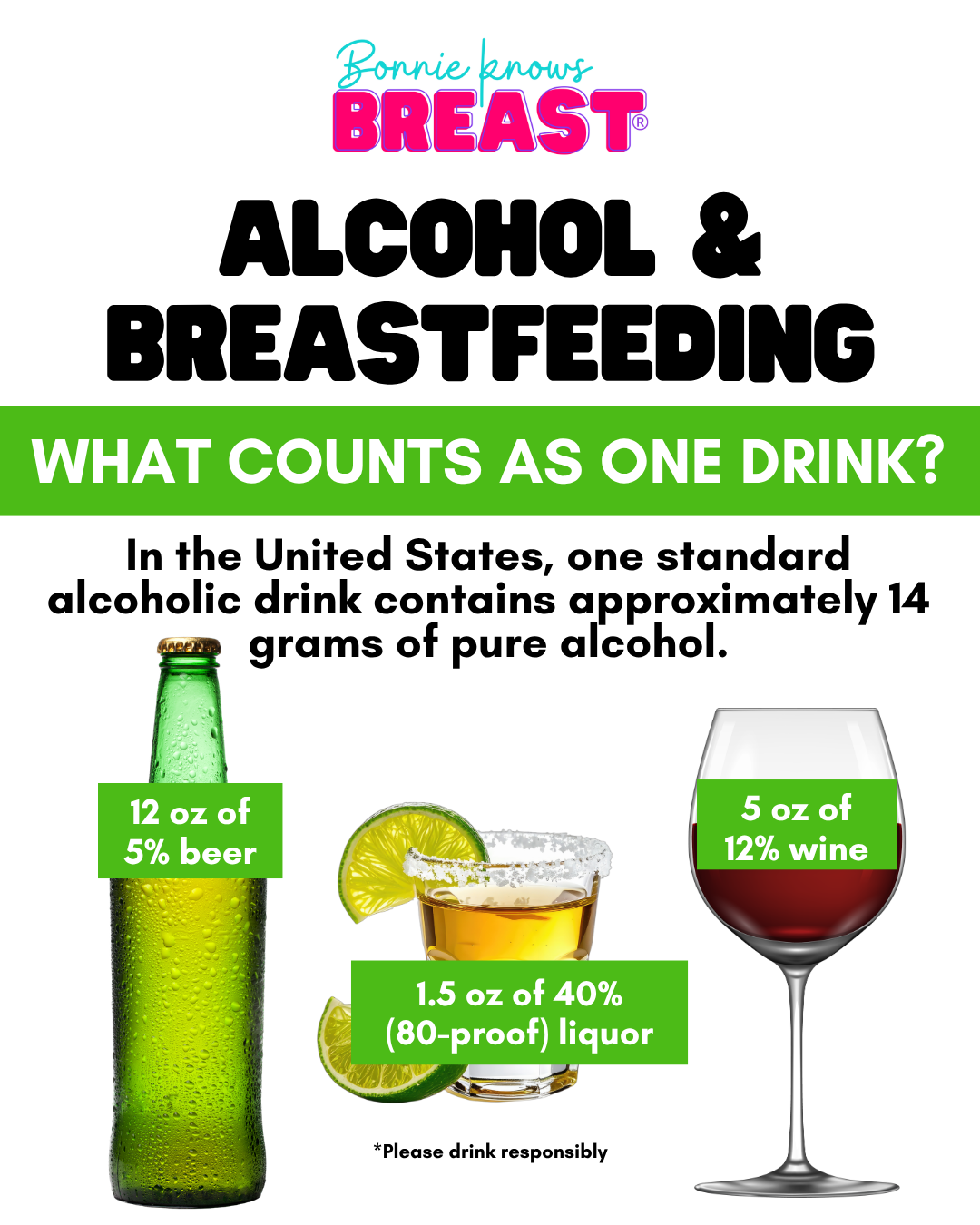
What Counts as One Drink?
This part matters more than many people realize.
One cocktail isn't necessarily one standard drink.
In the United States, one standard alcoholic drink contains approximately 14 grams of pure alcohol. That's roughly:
*12 ounces of 5% beer**
*5 ounces of 12% wine**
*1.5 ounces of 40% (80-proof) liquor**
A strong craft beer, large restaurant pour of wine, or cocktail containing several shots may actually contain two or more standard drinks.
For example, the CDC points out that a 12-ounce beer containing 9% alcohol is approximately 1.8 standard drinks, not one. So when you're trying to estimate how long alcohol may remain in your milk, think in terms of standard drinks, not glasses.
How Long Should I Wait to Breastfeed After Drinking?
The CDC's current guidance states that not drinking is the safest option, but moderate alcohol consumption—defined as up to one standard drink per day—is not known to be harmful to a breastfed infant. For the most conservative approach, the CDC recommends waiting at least two hours after one standard drink before breastfeeding.
A useful general guideline is:
About 2 hours per standard drink.
So very roughly:
1 standard drink → about 2–3 hours
2 standard drinks → about 4–5 hours
3 standard drinks → about 6–8 hours
These are estimates, not exact timers. Your weight, food intake, metabolism, amount consumed, and how quickly you drink all affect how long alcohol remains detectable.
The InfantRisk Center takes an individualized approach and offers a “Time to Zero” calculator based primarily on maternal weight and number of standard drinks. InfantRisk also notes that after moderate drinking, breastfeeding can resume once the parent feels neurologically normal, while recognizing that some parents prefer the more conservative option of waiting until the estimated milk alcohol level reaches zero.
Timing Your Drink Can Reduce Exposure
If you'd like a drink and want to minimize your baby's exposure even further, timing can help.
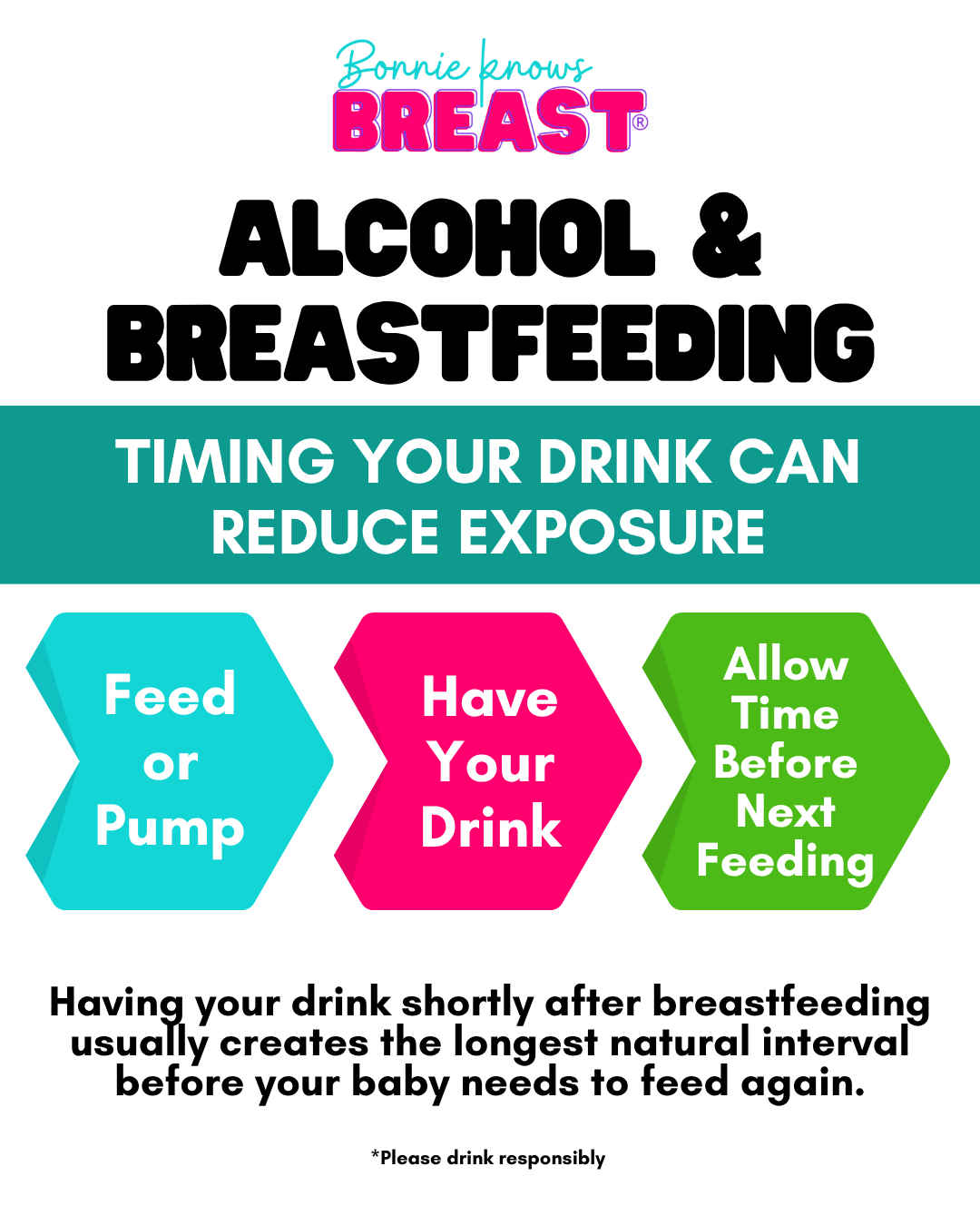
One easy strategy is:
Feed or pump → have your drink → allow time before the next feeding.
Having your drink shortly after breastfeeding usually creates the longest natural interval before your baby needs to feed again.
This strategy may be particularly easy with an older baby who has a somewhat predictable feeding pattern.
Of course, newborns aren't famous for respecting schedules. If your baby needs to eat sooner than expected and you'd prefer to wait longer before breastfeeding, previously expressed milk can be used.
What If I Have More Than One Drink? Is it safe to breastfeed?
Having several drinks changes the conversation.
The more alcohol you consume, the longer it takes your body—and therefore your milk—to return to zero alcohol.
The CDC estimates alcohol may be detectable in breast milk for approximately:
2–3 hours after one drink
4–5 hours after two drinks
6–8 hours after three drinks
If you know you're attending a wedding, party, girls' night, date night, or other event where you may have multiple drinks, planning ahead can make things much easier.
You might breastfeed or pump before drinking, have previously expressed milk available if needed, and pump while you're away if necessary for comfort or to maintain your usual milk-removal schedule.
The Bigger Safety Issue May Not Be the Milk
This deserves just as much attention as the amount of alcohol in breast milk.
Alcohol can impair your ability to safely care for a baby.
The CDC recommends that a caregiver who has been drinking excessively arrange for a sober adult to care for the infant.
That means thinking beyond the milk itself.
If you've had enough alcohol that you're impaired, make sure another sober adult is responsible for holding, carrying, bathing, driving with, and otherwise caring for your baby.
And alcohol and bedsharing are not a safe combination.
Sometimes the most important question isn't:
"Is there alcohol in my milk?"
It's:
"Am I able to safely care for my baby right now?"
Does Beer Increase Milk Supply?
Sorry to disappoint the stout-loving relatives giving you breastfeeding advice, but beer is not a proven galactagogue.
Alcohol may actually do the opposite.
Alcohol can interfere with oxytocin and temporarily inhibit the milk ejection reflex (letdown). Research has also found that babies may consume less milk in the hours immediately following maternal alcohol consumption.
Both the American Academy of Pediatrics' HealthyChildren guidance and InfantRisk note that alcohol does not increase milk supply, and chronic or excessive alcohol consumption may negatively affect milk production.
So if someone tells you that you need a beer to make more milk, you officially have permission to retire that piece of advice.
If you enjoy a beer, enjoy it because you like beer—not because your breasts require it.
What About Alcohol Test Strips for Breast Milk?
You've probably seen strips marketed to breastfeeding parents that claim to detect alcohol in breast milk.
They aren't necessary.
Because alcohol levels in breast milk closely parallel blood alcohol levels, understanding how much you drank, when you drank it, and allowing time for your body to metabolize the alcohol is generally more useful.
If you'd like a more individualized estimate, InfantRisk's Time to Zero calculator uses research-based calculations incorporating body weight and number of standard drinks.
What About Regular or Heavy Drinking?
Occasional alcohol consumption and chronic or heavy alcohol use are very different situations.
Higher and repeated alcohol exposure may affect infant sleep, growth, development, and feeding. Excessive alcohol consumption can also interfere with milk production and, importantly, impair a caregiver's ability to safely care for an infant.
If alcohol use is frequent or you're having difficulty controlling how much you drink, that's no longer simply a question about timing breastfeeding around a cocktail. It's worth having a confidential conversation with your healthcare provider about both your health and your baby's safety.
So, Can I Have a Glass of Wine While Breastfeeding?
For most healthy breastfeeding parents and babies, an occasional drink does not mean breastfeeding needs to stop.
If you want to take the most conservative approach:
Breastfeed or pump first, have your drink, and wait approximately two hours per standard drink before breastfeeding again.
But also remember:
You don't need to pump and dump just because you had a drink.
You don't need to stop breastfeeding because you want to enjoy an occasional cocktail.
And you don't need to feel guilty for asking the question.
Breastfeeding recommendations should help families make informed decisions—not create unnecessary fear.
Quick FAQ: Alcohol and Breastfeeding
Can I drink alcohol while breastfeeding?
Not drinking alcohol is the safest option, but according to the CDC, moderate alcohol consumption—up to one standard drink per day—is not known to be harmful to a breastfed infant. Waiting approximately two hours after one standard drink further reduces exposure.
How long after drinking can I breastfeed?
A commonly used guideline is approximately two hours per standard drink, although the exact time varies depending on your body weight, amount consumed, food intake, drinking speed, and metabolism.
Do I have to pump and dump after drinking?
No. Pumping does not remove alcohol from your bloodstream or make alcohol disappear from your milk faster. You may still want to pump for comfort or to maintain your normal milk-removal schedule.
Does alcohol stay trapped in breast milk?
No. Alcohol moves between the blood and breast milk. As your blood alcohol concentration decreases, the alcohol concentration in your milk decreases as well.
Can I breastfeed immediately after one drink?
Alcohol levels typically peak approximately 30–60 minutes after drinking. If you want to minimize exposure, feeding immediately before drinking and allowing approximately two hours afterward is a practical strategy.
Does beer help milk supply?
No. Beer has not been shown to increase milk production. Alcohol can temporarily interfere with oxytocin and milk letdown, and excessive or chronic alcohol intake may decrease milk production.
What if I'm going to a wedding or event and want several drinks?
Plan ahead. Feed or pump beforehand, have previously expressed milk available if you want to avoid feeding while alcohol is present, and pump as needed for comfort or to maintain your normal schedule. Most importantly, arrange for a sober caregiver if you may become impaired.
The Bottom Line
Alcohol and breastfeeding doesn't have to be an all-or-nothing conversation.
Alcohol in your milk follows alcohol in your bloodstream. Time clears it—not pumping and dumping.
For someone who wants an occasional drink, a little planning can significantly reduce infant exposure while allowing breastfeeding to continue.
And perhaps most importantly, we need to separate two different questions:
How much alcohol could my baby receive through my milk?
and
Am I sober enough to safely care for my baby?
Both matter, but they aren't the same thing.
If you have questions about alcohol, medications, milk supply, pumping, or feeding your baby, an IBCLC can help you look at your individual situation and make a plan that works for you and your family.
*This information is intended for general education and is not a substitute for individualized medical advice. Alcohol metabolism varies based on body weight, number and size of drinks, food intake, drinking speed, and other factors. Recommendations may differ for premature, medically fragile, or very young infants.
Resources
CDC: Alcohol and Breastfeeding: (https://www.cdc.gov/breastfeeding-special-circumstances/hcp/vaccine-medication-drugs/alcohol.html?utm_source=chatgpt.com)
InfantRisk Center: Alcohol & Breastfeeding — Understanding “Time to Zero”: (https://www.infantrisk.com/content/how-long-after-drinking-can-you-breastfeed-understanding-time-zero?utm_source=chatgpt.com)
American Academy of Pediatrics/HealthyChildren: Alcohol & Breast Milk: (https://www.healthychildren.org/English/ages-stages/baby/breastfeeding/Pages/Alcohol-Breast-Milk.aspx?utm_source=chatgpt.com)
Lactation Loop: Breastfeeding and Alcohol: (https://lactationloop.com/blog/breastfeeding-and-alcohol-what-an-ibclc-actually-tells-her-patients?utm_source=chatgpt.com)
Liz Brooks, IBCLC: Lactation and Booze DO Mix: (https://www.lizbrooksibclc.com/2021/11/20/lactation-and-booze-do-mix/?utm_source=chatgpt.com)